

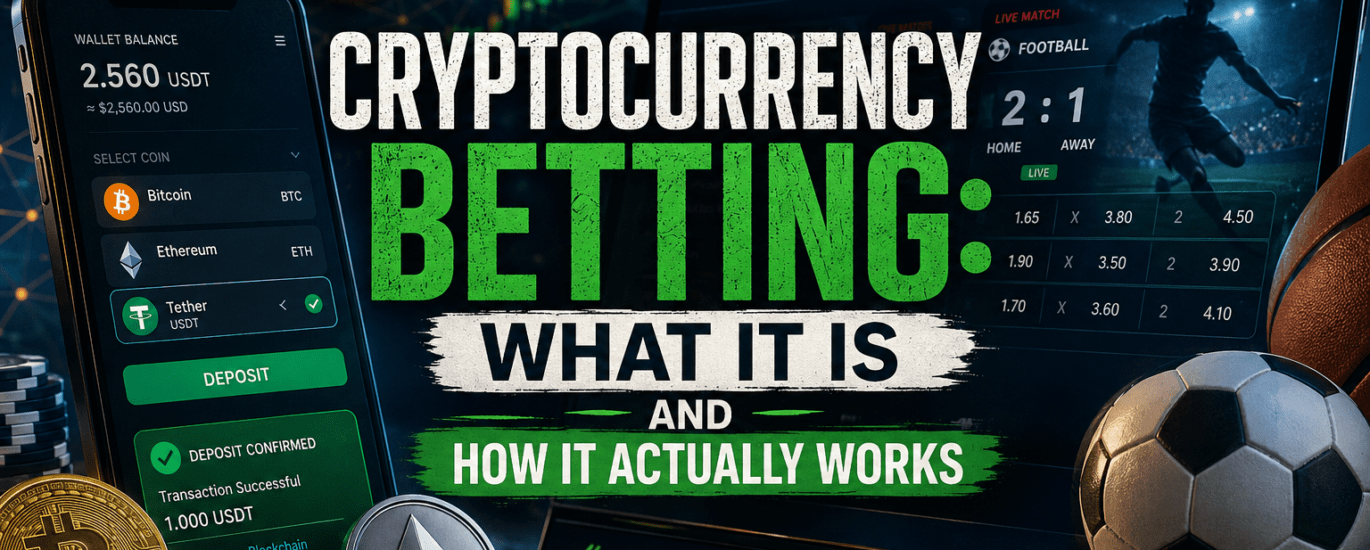
Place a bet the old way, and the winnings sit in limbo for three days, assuming the card processor doesn’t flag the transaction first for good measure. That whole wait basically disappears once you switch over, and that’s the entire pitch behind cryptocurrency betting in one sentence.
It just means wagering with digital coins, Bitcoin, Ethereum, and USDT, instead of a debit card or bank transfer. Same sports, same odds, and the same casino games underneath. What’s different is what’s happening below the surface, a public blockchain instead of a bank sitting in the middle of everything.
How It Actually Works
Open a wallet, buy some crypto on an exchange, and send it straight to your betting site’s address. No card number, no bank quietly deciding whether to approve the charge. Balance credits once the transaction clears on chain, sometimes in under a minute depending on which coin you’re using.
From there it’s just betting. Pick a match, pick a market, and place the stake. Win, and the payout comes back to your wallet the same way it went out, just reversed. Blockchain only touches the money side. Odds, games, and the actual betting part—none of that changes from any sportsbook you’ve already used.
Why Bettors Are Actually Switching
Speed’s the obvious one for anyone new to cryptocurrency betting. Card deposits sometimes sit pending for a day. A crypto deposit on a fast network lands before you’re even done reading the confirmation screen. Same deal on withdrawals, and that matters more than people expect the first time they win something real and don’t want to wait a week to see it hit their account.
Privacy gets brought up constantly too. Traditional sites want full billing info tied straight to a bank account. Crypto sites still run identity checks most of the time, sure, but the transaction itself doesn’t drag your bank into it, so there’s no line item on a statement for anyone else to stumble across.
Cost’s the third piece. Bank wires and card processors take a cut, sometimes a nasty one on anything crossing borders. Cryptocurrency betting skips most of that since money moves wallet to wallet with nobody standing in the middle collecting a toll.
The Part Nobody Really Warns You About
Bitcoin and Ethereum move. Sometimes a lot, sometimes right in the window between placing a bet and it settling. Deposit a hundred bucks in Bitcoin, win the bet, and the market could’ve shifted five percent while you were still waiting on the result. Goes both ways, and none of it’s something you actually control.
This is exactly why stablecoins took over the space. USDT sits pegged to the US dollar, so a hundred-dollar deposit is still worth a hundred dollars whether you cash out five minutes later or five days later. Most bettors who’ve been doing this a while stick to a stablecoin specifically to dodge this whole headache and save the volatile coins for actual investing rather than betting.
Finding a Platform That Handles It Properly
Not every site that slaps “crypto accepted” on the homepage actually built its cashier around cryptocurrency betting properly. Plenty just bolt one coin onto an existing setup and never explain the network fees or how long anything takes. What actually matters is a site that lists supported coins clearly, shows confirmation times up front, and doesn’t hide withdrawal limits three pages deep in a terms document nobody opens.
Jet10 Casino lays out supported coins and networks right at the cashier; no digging is required to figure out what’s actually going on. Want to see what a real deposit flow looks like before committing any money? Jet10 Casino’s payment breakdown walks through minimums, fees, and processing times without the usual runaround.
For the underlying mechanics of how a blockchain transaction actually confirms and settles, the Federal Trade Commission’s cryptocurrency guide is a decent plain language starting point, and nobody’s trying to sell you anything there.
Play It Smart
Fast deposits and quick payouts make it easy to just keep going without clocking how much time has passed, which is worth being honest with yourself about. Set a number before you start, treat it as final, and win or lose, no exceptions, once you’re a few bets deep. If it ever stops feeling like fun and starts feeling like something you can’t put down, the National Council on Problem Gambling has free, confidential support any time, no strings attached.
FAQs
Is cryptocurrency betting legal?
That depends on which country you are located in. In some countries, it is regarded the same way as online gambling while other countries consider it illegal, making it important to know your local laws rather than focusing on features provided by the platform.
Do I need to already own crypto to start?
Nope. Most exchanges let you buy Bitcoin, Ethereum, or USDT with a card or bank transfer, then send it straight over to your betting site’s wallet from there.
Why do most crypto bettors use USDT over Bitcoin?
USDT maintains its value tied to the dollar, thus there would be no change in price based on the fact that you are waiting to receive the outcome of a bet, in contrast to Bitcoin or Ethereum which can fluctuate wildly in a matter of hours.
What happens in case of sending digital assets to the wrong address?
Lost forever. In most cases, once a transaction is broadcasted on the Blockchain, it cannot be reversed, thus only making sure of the address and the network before clicking send is the best form of protection that you have.
Is cryptocurrency betting more anonymous than regular betting?
More private, not fully anonymous. Licensed sites still verify identity most of the time, but the payment itself skips the bank entirely, so there’s no separate trail showing up on a statement. That’s really the whole trade-off here: more privacy and speed, less of the built-in reversibility a bank card gives you when something goes wrong.